
Garage Cleaning Tips for the Overwhelmed: A Simple Guide
If your garage feels like a catchall closet with a concrete floor, you are not alone. Garages collect decisions we postponed, projects we meant to finish, and gear we might use someday.
This guide turns overwhelm into a simple plan. You will learn how to sort fast, set up storage that fits real life, and keep hazards in check. No fancy systems, just clear steps that work.
TL;DR
Start with a fast safety sweep so you do not trip, spill, or breathe dust you should not.
Sort by purpose, not by where items landed. Make four decisions only: keep, donate, recycle, trash.
Store by zones that match your week, then label in plain language that you can read from the car.
Store heavy items low. Store hazardous chemicals upright in their original containers in a secure/locked spot out of reach of kids and pets, and away from heat and ignition sources.
Keep often-used items at chest height near the door.
End with a 10-minute reset habit each week to keep it clean with almost no willpower.
Garage Cleaning Tips for the Overwhelmed
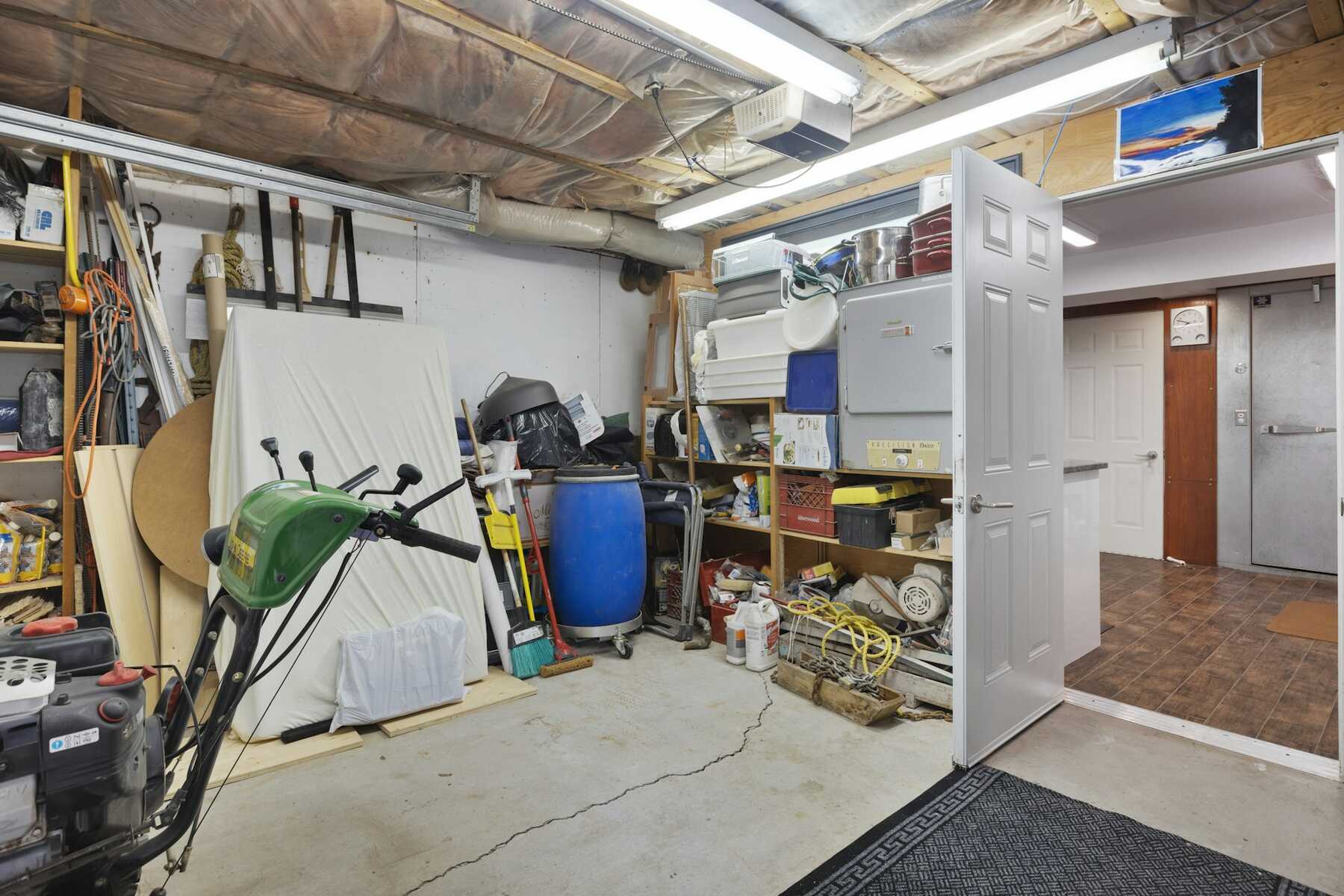
The sheer volume of items often makes it impossible to find a starting point, leading to a cycle of procrastination and a completely inaccessible space. A structured approach ensures you can reclaim your square footage for vehicles or hobbies rather than letting it remain a source of constant anxiety.
This guide provides a clear framework to sort through the chaos in manageable blocks so you don't feel buried by the scale of the job. For those who need a total reset without the heavy lifting, our professional garage cleanout service delivers a swept, empty canvas in just a few hours.
Start With a Safety Sweep
Before you sort, make the space safe. Start with these steps:
Open the garage door for airflow.
Pick up sharp tools, broken glass, and stray screws.
Move pesticides, fuel, and paint to a stable spot away from kids and pets.
If you see mold or rodent droppings, pause and plan to clean those properly with gloves and the right cleaning method. When in doubt, set the questionable item in a labeled bin for later handling.
Wear closed-toe shoes and work gloves. If you climb, use a sturdy step ladder on a flat surface.
Keep a broom, contractor bags, and a spare box for donations within reach so you are not hunting around mid-task.
Make Decluttering Decisions Easy
Limit yourself to four choices: keep, donate, recycle, trash. Work from the entrance inward so you create quick wins and visible progress. Ask two quick questions per item:
Did I use this in the last year, or will I use it in the next season?
Would I buy this again at full price if it went missing?
If the answer is no, it's a candidate to leave. Expired chemicals, empty fuel cans, unlabeled jars, and mystery cords usually go. Sentimental items deserve a small, pre-set limit like one clear bin.
In case decision fatigue is the whole problem, our team sorts, hauls, and properly disposes of what needs to go. You'll get instant momentum without spending your weekend buried in piles.
Determine What to Keep, Donate, Recycle, or Trash
Use the table below as your fast filter. When a category fits, act on the matching step without rethinking.
Set Up Smart Storage Zones
Zones are simply areas grouped by how you use items. They cut hunting time and keep clutter from creeping back.
Daily grab zone: Dog leash, umbrella, reusable bags, and the shoes you actually wear. Place near the house door at chest height.
Project zone: Power tools, drill bits, screws, sandpaper. Use a pegboard or wall rail so you can see the outline of each tool.
Sports and seasonal zone: Bikes, balls, camping bins, holiday bins. Keep rotating gear at mid height and off-season higher up.
Yard and messy zone: Mower, trimmer, soil, garden tools. Store near the exterior door, with a floor mat to catch debris.
Hazard zone: Fuel, pesticides, pool chemicals. Store upright in original containers in a secured/locked area out of reach of kids and pets, ventilated, and away from heat sources and ignition.
Label bins with simple words you use out loud, like paint supplies, bike tools, or winter gloves. Clear bins help you see what is low and what is missing.
If your ‘trash/recycle/HHW’ pile is already huge, skip the multiple trips. Our garage cleanout crew can remove everything in one session, including dump runs, and leave the garage swept and ready. Then, you can organize what remains.
Choose Shelves, Hooks, and Bins That Work
You do not need a showroom. You need systems that are strong, visible, and easy to reset.
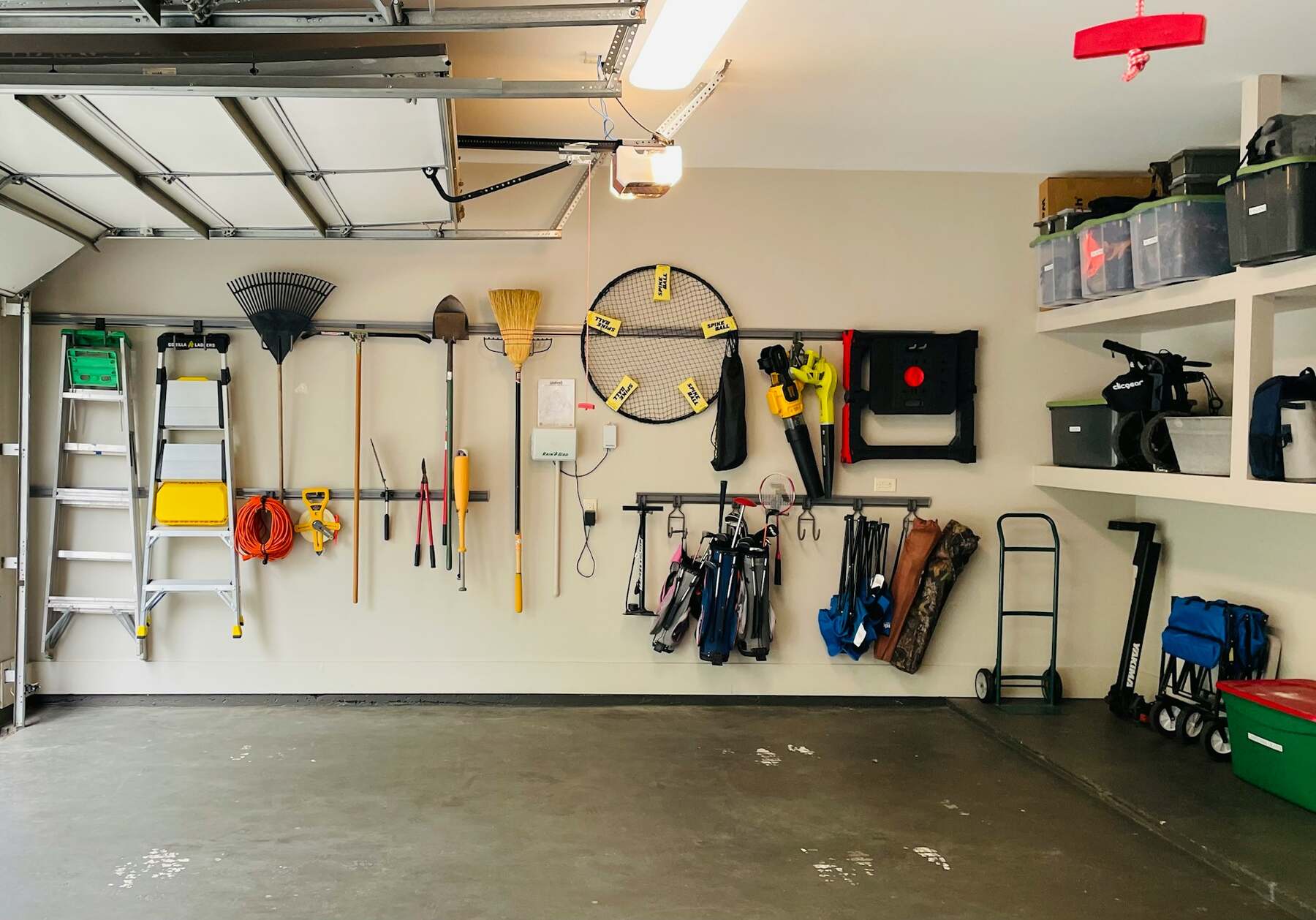
Wall first, floor last. Use studs, rails, or track systems to get geared up and clear the floor for parking and sweeping.
Deep shelves for bins, shallow shelves for small parts. Deep shelves swallow small items. Use clear shoebox bins or drawer organizers for screws, nails, and tape.
Hooks and ceiling racks for bulky but light items. Hang ladders, hoses, and seasonal decorations. Keep really heavy items on the floor or low shelves.
One label per container side. Use 2-inch lettering or bright painter’s tape and a marker.
Handle Hazardous and Tricky Items Safely
Some garage items need special care. Identifying these items early allows you to schedule proper drop-offs at local facilities rather than letting toxic materials linger in your workspace.
Household hazardous waste (HHW): Old paint, solvents, pesticides, fuel, and motor oil should go to a local HHW program, not in the trash or down drains. Your city or county usually runs drop-off days or permanent facilities.
Rodent droppings and heavy mold: Wear gloves and ventilate first. Do not dry sweep or vacuum droppings. Wet or disinfect first, then wipe up and bag waste for disposal.
Lithium-ion batteries: Store in a cool, dry place, not on chargers long-term. Recycle damaged or swollen packs at an approved site.
Ladders and overhead work: Follow ladder safety basics and do not overreach. If you are solo, keep the work low and stable.
Keep the Floor Clear and Traffic Smooth
Treat your floor like a hallway, not a shelf. Park cars consistently and leave a walkway along at least one wall. Put a welcome mat where the house door meets the garage to trap grit.
Sweep once a week and do a deeper clean seasonally. If you want extra traction and stain resistance, consider a garage floor coating or interlocking tiles, but it is optional.
Follow a Maintenance Routine That Does Not Drain You
Sustainability beats intensity. Add a 10-minute reset to your calendar each week. Put items back in zones, empty the small trash, and sweep the main lane.
In spring and fall, do a 60-minute refresh: purge duplicates, check expiration dates on chemicals, and rotate seasonal gear. That rhythm keeps the space useful with minimal effort.
And if you’re past the point of maintenance and need a full reset first, book a full garage cleanout where our services clear the space in one afternoon so your new routine actually sticks.
Examples
These scenarios prove that a systematic cleanout can quickly transform a neglected space back into a functional part of your home.
Busy Family in a Suburban Two-Car Garage
This family had strollers, three bike sizes, paint from past owners, and a mountain of sports balls. They started with a safety sweep, then moved expired pesticides and half-empty fuel cans to a pickup box for the next hazardous waste event.
They made four zones: daily grab by the house door, sports on a rail system, yard tools on a shovel rack, and a project shelf with clear bins. Duplicate wrenches and outgrown pads went to donation. A weekly Sunday reset kept the floor clear so both cars fit again.
Solo DIYer With Projects Everywhere
A solo homeowner had six half-finished projects and tools scattered across two folding tables. They used the four-choice rule to empty the tables, then mounted a 4-foot pegboard for the tools they reach for weekly.
Specialty tools moved into labeled bins by project: Plumbing, Electrical, Tile. Old paint cans with dried rims went to hazardous waste. The rest were consolidated and labeled with room names. With parts visible and grouped, projects finally moved forward without buying duplicates.
Actionable Steps / Checklist
This step-by-step roadmap breaks a massive project into manageable phases to prevent burnout and keep your momentum high when cleaning your garage.
Open the door, put on gloves, shoes, and a dust mask if needed.
Do a safety sweep. Remove trip hazards, isolate chemicals, and set aside sharp objects.
Stage four containers with labels like keep, donate, recycle, trash.
Work in 30-minute blocks from the entrance inward.
Use the decision table to sort fast. Don't create a maybe pile beyond one small bin.
Create zones such as daily, project, sports/seasonal, yard, and hazard.
Install wall storage where it matters most. Label bins and shelves.
Schedule hazardous waste drop-off and battery recycling.
Do a 10-minute weekly reset. Add a 60-minute seasonal refresh.
Glossary
Knowing these terms helps you identify which items require professional disposal and how to maintain a safe, functional workspace.
Household Hazardous Waste (HHW): Leftover chemicals and products like paint, fuel, or pesticides that require special disposal.
Zone Storage: Grouping items by use and location so you can grab and return them fast.
Pegboard: A perforated board that holds hooks for visible tool storage.
Lithium-Ion Battery: A rechargeable battery common in tools and e-bikes that needs careful charging and storage.
FIFO (First In, First Out): Using the oldest supplies first, so nothing expires at the back of a shelf.
PPE (Personal Protective Equipment): Basic safety gear like gloves, goggles, and masks used during cleanup.
FAQ
Q: How long will a full garage cleanup take?
A: Most people can reclaim order in 4 to 8 focused hours, split over a weekend, if they stick to the four decisions and zone setup.
Q: Do I need to buy new shelves before I start?
A: You don't necessarily need to buy new shelves before cleaning the garage. Declutter first, then use what you have and fill gaps with a few strong shelves, rails, and clear bins.
Q: What should never be stored in the garage?
A: Avoid storing extra fuel or propane in the garage when possible. If you must store fuel, keep it in approved, sealed containers in minimal quantities, secured and away from heat/ignition sources. Avoid open food, and keep paper records and photos inside to prevent moisture damage.
Q: How do I dispose of old paint and chemicals?
A: To dispose of old paint and chemicals, use your city or county hazardous waste program or a designated drop-off. Do not pour chemicals down drains or into the street.
Q: Are ceiling racks safe?
A: Ceiling racks are safe if professionally rated and correctly anchored. However, keep only light, bulky items overhead and store heavy gear low.
Final Thoughts
You don't need a perfect system to have a workable garage. Make quick decisions, set clear zones, and protect safety first. With a short weekly reset, the space will keep serving you without slipping back into chaos.
For the fastest path to a clean slate, book a garage cleanout (full removal + dump runs + final sweep). If you want a lasting setup afterward, add garage organization for shelving, bins, and labels. And if the concrete needs a true refresh, our floor washing services can remove dirt, stains, and oil buildup.
